One of the most common questions we hear: "How often should I clean my AC?" The honest answer depends on several factors — AC type, usage level, and the site's environment (near the coast, a dusty area, etc.). In this article we give you a practical schedule you can apply to your home right away.
Recommended maintenance schedule by check type
Filters — every 2 to 4 weeks in summer
Filters are your first line of defense against dust, and in Oman, where dust is part of the environment, we recommend checking them every two weeks to a month during peak AC use. Cleaning is simple: pull the filter out, wash it with plain water, and let it dry completely before reinstalling.
Full indoor unit cleaning — every 3 to 4 months
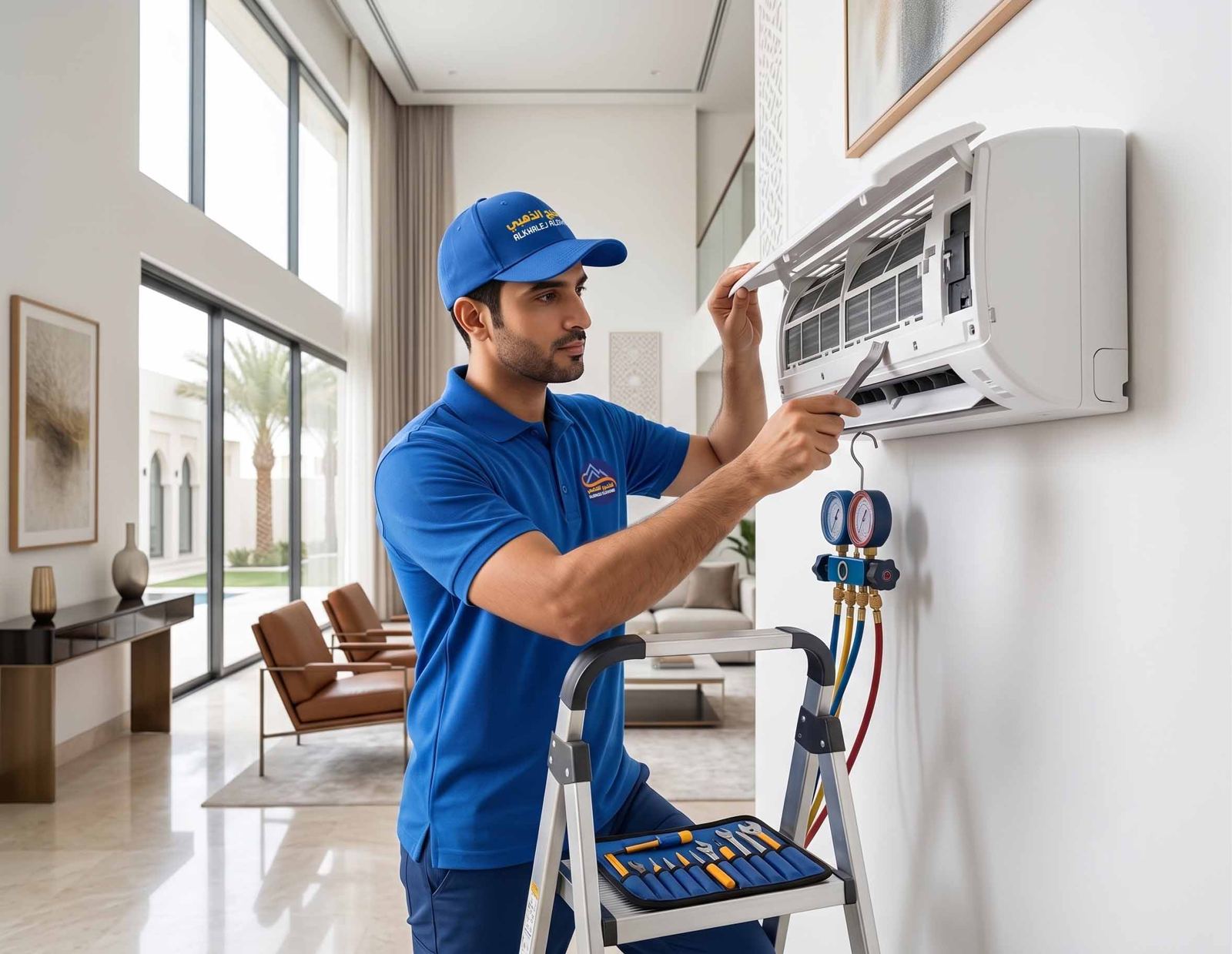
This includes washing the evaporator coil and the indoor fan (blower wheel) with pressurized water to remove dust and moisture buildup that filter cleaning alone doesn't reach.
Outdoor unit cleaning — every 4 to 6 months
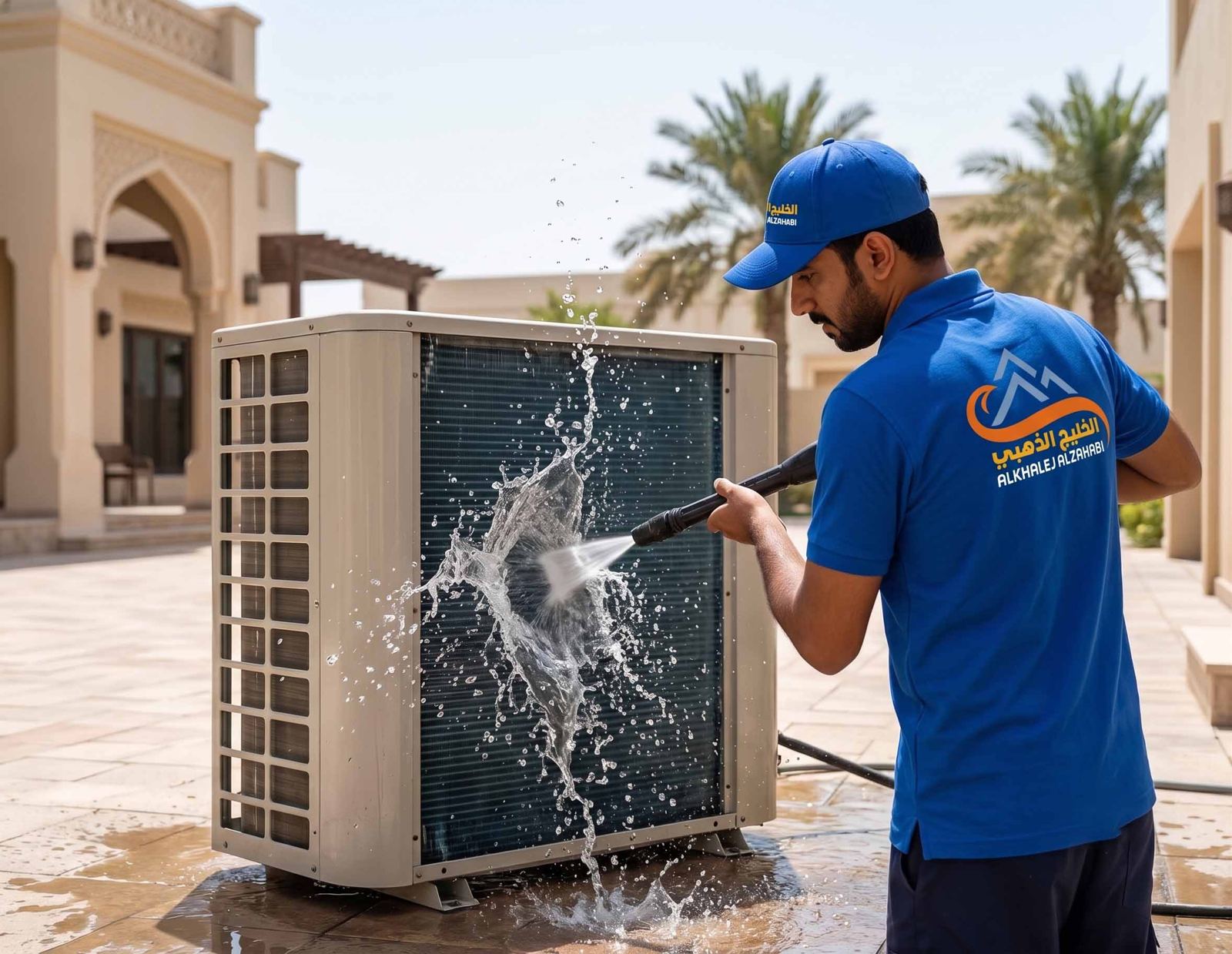
The outdoor unit is directly exposed to dust and sand, and its buildup on the heat-exchange coils reduces heat dissipation efficiency. Pressure washing restores its efficiency noticeably.
Full technical inspection (preventive maintenance) — twice a year
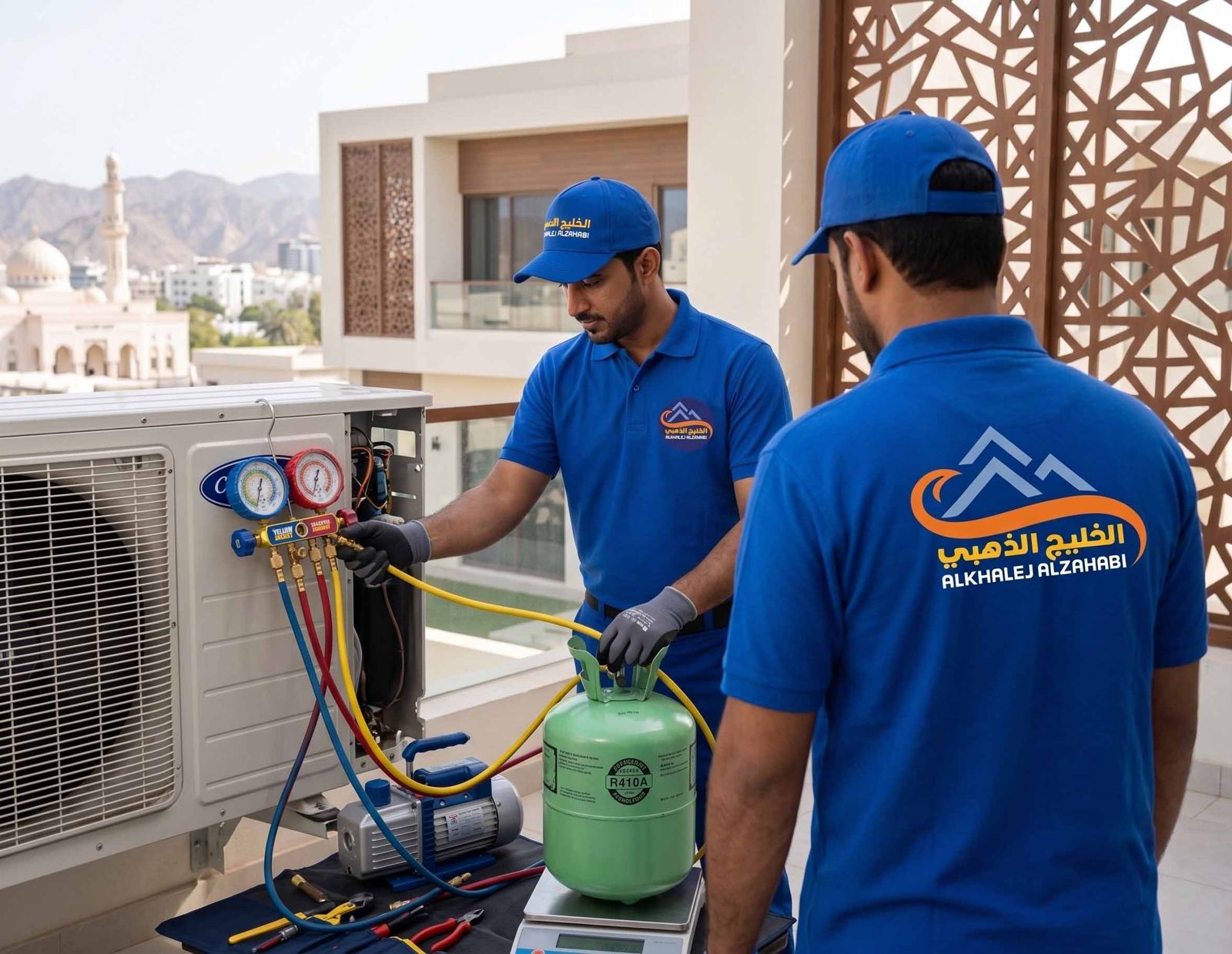
A comprehensive check that includes gas pressure measurement, electrical connection inspection, compressor current measurement, and drain line inspection. We recommend scheduling one visit right before summer and another after peak season ends.
Golden rule: cleaning maintains cleanliness, but a full technical inspection is what catches electrical and mechanical problems before they become a costly fault.
A simplified schedule by usage environment
- A typical home, moderate use (8-10 hours/day): filters monthly, full cleaning every 4 months, technical inspection twice a year.
- A home near the coast or in a dusty area: filters every two weeks, full cleaning every 3 months, technical inspection every 3-4 months.
- An office or commercial site (heavy all-day use): filters every two weeks, full cleaning every two months, technical inspection every 3 months.
A note for central AC systems
If you have a central AC system, there's an extra component not present in split units: the air distribution ductwork. This needs inspection and cleaning every one to two years, because dust buildup inside it reduces airflow to every room and affects indoor air quality throughout the home, even if the main unit is perfectly clean.
Signs your AC needs maintenance before its scheduled date
Even if you haven't reached the scheduled date, some signs call for an immediate visit: a noticeable drop in cooling, an unusual noise from the indoor or outdoor unit, an unpleasant smell on startup, or water dripping from the indoor unit. Any of these signs deserves a quick check instead of waiting for the next scheduled maintenance.
How much does neglecting maintenance cost you long-term?
Neglecting regular maintenance doesn't show its effect immediately, but it accumulates: a gradual rise in your electricity bill, a shorter lifespan for the compressor (the most expensive part in the AC), and a higher chance of a sudden breakdown at the peak of summer, when demand for technicians is high and wait times are longer. A simple comparison: the cost of regular annual maintenance is far lower than the cost of replacing a failed compressor once.
Conclusion
Sticking to a clear maintenance schedule is the cheapest investment you can make to protect your AC from costly faults and ensure stable performance year-round. If you haven't been following a schedule for a while, the best step now is booking a full inspection to start fresh.